PRAHRAN STORE NOW OPEN · THU–MON · 10AM–6PM

Masamoto Sohonten  |  SKU: MASA_HS0433

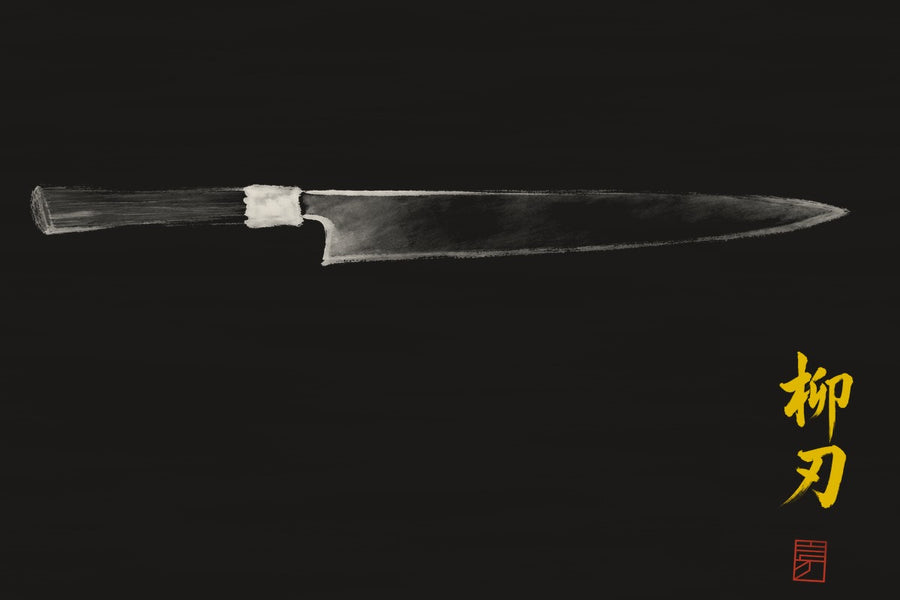
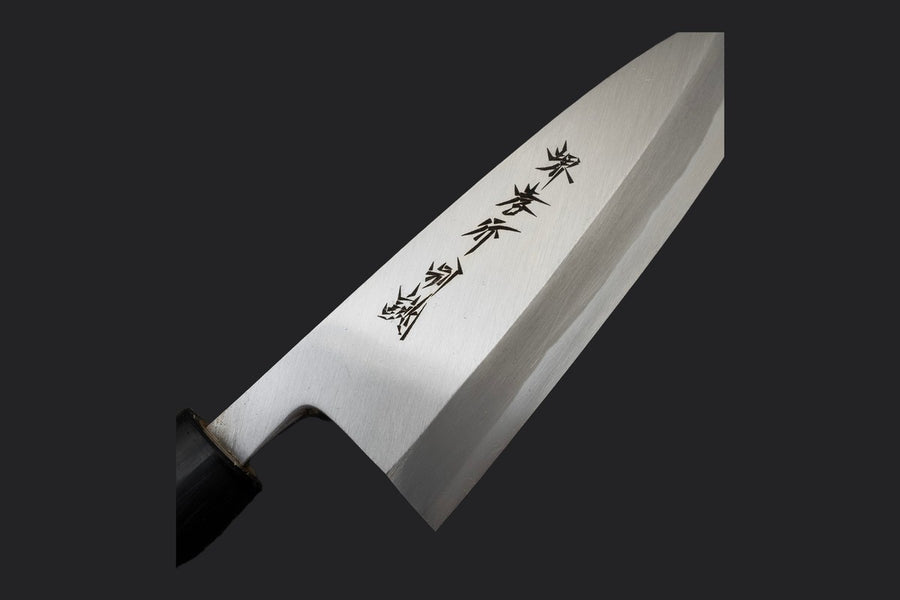
Masamoto Sohonten Honyaki (HS, White 2) Yanagiba 330 mm with SAYA

Regular price ₩1,793,000

IMPORTANT: Carbon steel knives can rust or patina quickly if not cared for properly. They require regular cleaning, drying, and oiling. If you are unfamiliar with carbon steel maintenance, we recommend choosing a stainless steel option instead.

Sold out right now

Leave your email and we’ll send one message the moment it’s back in stock.

One email, no marketing. Privacy policy.

Availability

  • St Peters, NSW —
    2 Bishop St, Unit 2, St Peters NSW 2044
  • Crows Nest, NSW —
    107 West St, Shop 1, Crows Nest NSW 2065
    Pickup only
  • Prahran, VIC —
    180 Commercial Road, Shop 1, Prahran VIC 3181
    Pickup only
Detailed Specifications
Line Masamoto HS
Profile Yanagiba / Sashimi knife
Steel White 2 / Shirogami #2 | Carbon
Blade Construction Honyaki
Hardness (HRC) 60 - 64
Surface Finish Kasumi
Handle
Region Tokyo
Best for
  • Pro chefs
  • Collectors
  • Free shipping for knives over AU$200 Australia wide.
  • World-wide shipping via DHL Express, 3 to 5 days.


Honyaki (本焼) is the format with no safety net: the blade is one piece of tool steel, no cladding, and in Japan honyaki knives are made by highly skilled masters because they are far harder to forge than clad knives. The HS is Masamoto's honyaki in white steel (Hitachi White 2), hardened to 61-62 HRC, on a D-shape wa handle of ho wood with buffalo horn, the 270 and 330 mm sold with a saya.

This is the serious-investment tier of the catalogue, and it rewards an experienced hand: single bevel, carbon, and solid hard steel that wants drying after every use and honest work on the stones. The line includes yanagiba in 270, 300 and 330 mm. For a professional who wants to live on a pure carbon edge, with no soft cladding between the stone and the core, this is what the format asks and what it gives back.

Pros Cons
  • Excellent performance
  • Great for professionals
  • Highly collectable
  • High budget
  • Need extra care
Care Instruction
  1. Don't cut hard things! Japanese knives are brittle so bone hacking is a NO NO!
  2. Wash with neutral detergent after use, and wipe dry;
  3. Please don't wash knife with dishwasher, it will damage the wood handle;
  4. Be careful not to leave the knife close to a heat source for a long time;
  5. It is a lot more dangerous to cut with a blunt knife than a sharp knife!
  6. It is best to sharpen a Japanese knife regularly on a waterstone.
  7. Oil the (carbon) knife if storing for an extended period of time to prevent rust.

Masamoto Sohonten

The Crowned King of Kanto Region

Masamoto Sohonten, the undisputed king of Japanese kitchen knives, has arrived at Knives and Stones. Started by Minosuke Matsuzawa in 1866, succeed by Kichizo Hirano in 1891 and registered its trademark in 1903, Masamoto Sohonten is now under the management of the 6th generation Masamoto: Masahiro Hirano. With more than 150 years of history, Masamoto Sohonten is recognised by almost every Japanese chef as the best kitchen knife brand in Japan, and it is often considered as the go-to tool for professionals.

“The hallmark of professionalism in single bevel knives, excellent in quality and consistency and once the dominating knife brand in the entire Kanto region.”

Est. 1866 | 慶応2年
Known for Excellently built traditional single bevel knives and KS series Gyuto
Website masamoto-sohonten.co.jp Read more about Masamoto Sohonten
Masamoto Sohonten — Tokyo

Knife details

Frequently asked questions

What is a yanagiba knife used for in sushi preparation?

A yanagiba is a single-bevel knife designed specifically for slicing sashimi and raw fish into flawless, clean cuts without crushing the delicate flesh.

This tool is defined by its long, slender profile and single-bevel geometry, which allows for the precision required in sushi preparation. K&S offers yanagiba in steels such as White #2, Blue #2, and Inox. For a practical starting point, the Hatsukokoro x Myojin Shirasagi White 2 Left Handed Yanagiba 210mm is available at a mid-range price, offering a standard entry size. Professionals or those seeking larger blades can look at the Nigara Anmon Blue 2 'Nejiri' Twist Bar Damascus Yanagiba 270mm at the premium end, which provides the length needed for larger fish fillets.

Shirogami 1 vs shirogami 2 — what is the difference?

Shirogami 1 (White 1) has a higher carbon content than Shirogami 2 (White 2), roughly 1.3% vs 1.1%, making it the purer carbon steel and the one some craftsmen still regard as the best, though in practice the two have become harder to distinguish as modern metallurgy has made both quite pure.

White 2 (Shirogami #2) has about 1.1% carbon and a hardness range of 60-64 HRC; White 1 sits around 1.3% carbon. That 0.2% difference is the core spec gap. More carbon generally means you can push hardness higher and hold a keener edge, but it also makes the steel more brittle and less forgiving. White 2 trades a bit of that potential peak sharpness for slightly better toughness and ease of sharpening.

Shirogami 1 carries a certain prestige. Sukenari's Nobuo Hanaki once told me directly that they only use White 1 for their mizu-honyaki because it is the pure form of carbon steel, it carries that halo. Among traditional smiths, White 1 is still spoken of as the benchmark. That said, in recent years the improvement in metallurgical manufacturing has narrowed the real-world gap. The rumor is that both grades are now so pure that separating them in practice is no longer straightforward. I've also heard that Hitachi has stopped producing White 1, though I can't confirm that.

You May Also Like