Prahran, VIC store now open from Friday to Tuesday, 10am till 6pm.

Knives and Stones  |  SKU: KNS-SLDYP-GY210

K&S Yuepo SLD Nashiji Gyuto 210mm, Ebony Handle

Sale price ₩155,000 Regular price ₩183,000

Availability

  • St Peters, NSW
    2 Bishop St, Unit 2, St Peters NSW 2044
  • Crows Nest, NSW
    107 West St, Shop 1, Crows Nest NSW 2065
    Pickup only
  • Prahran, VIC
    180 Commercial Road, Shop 1, Prahran VIC 3181
    Pickup only
Detailed Specifications
Line K&S Yuepo SLD Nashiji
Profile Gyuto / Chefs Knife
Weight 182 g | 6.4 oz
Edge Length 212 mm | 8 11/32″
Heel Height 51 mm | 2 1/64″
Width @ Heel 2.0 mm | 5/64″
Width @ Mid 2.0 mm | 5/64″
Width @ 1cm from Tip 1.0 mm | 3/64″
Steel SLD | Stainless
Blade Construction Sanmai - Stainless Clad
Hardness (HRC) 62 - 64
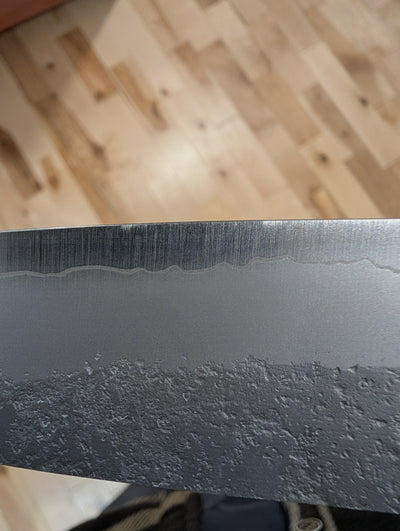
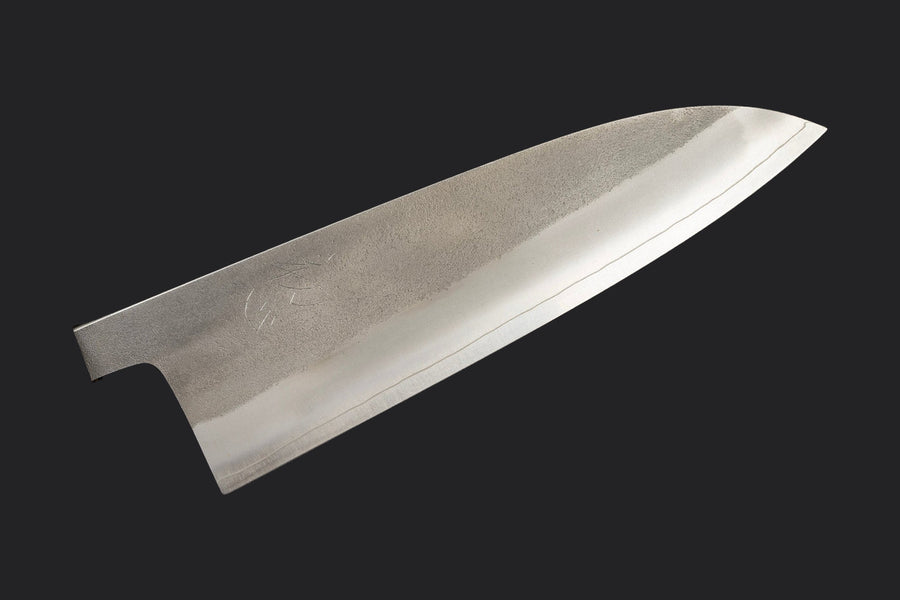
Surface Finish Nashiji
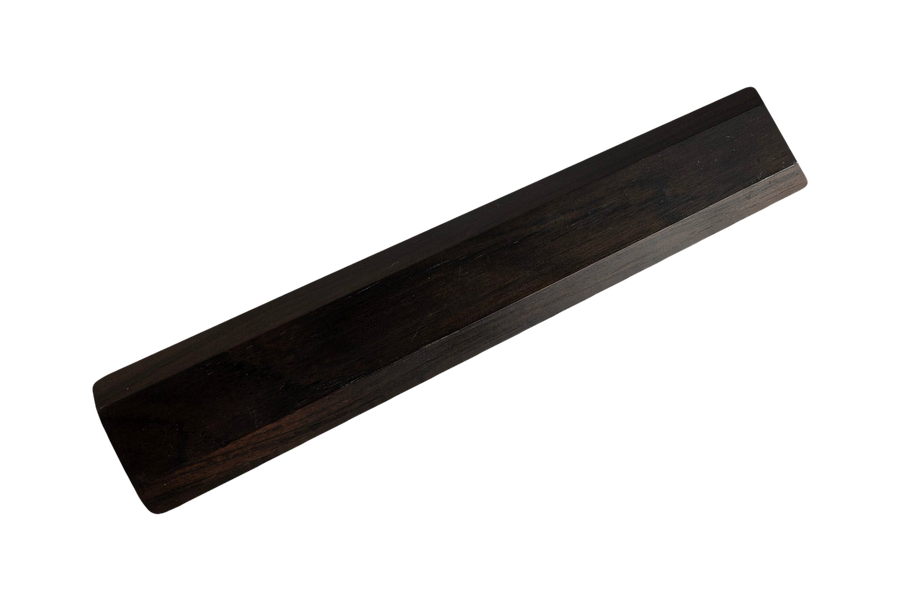
Handle Octagonal Ebony
Region Other
Best for
  • First-timers
  • Pro chefs
  • Household
  • Students
  • Gift buyers
  • Free shipping for knives over AU$200 Australia wide.
  • World-wide shipping via DHL Express, 3 to 5 days.


K&S Yuepo — Built Around What Makes a Knife Cut Well

For more than a decade, the K&S team has worked closely with Japanese kitchen knives, handling and studying thousands of blades from hundreds of makers. Across different steels, regions, forging styles and price points, one thing has consistently stood out to us: great cutting performance starts with great geometry.

Japanese knives have long set a high benchmark, combining exceptional performance with distinctive aesthetics and generations of knife-making tradition. But traditional production also comes with natural limitations in output and cost, putting some of the best-performing knives beyond what many cooks want or need to spend.

Yuepo began with the idea of taking what we had learned from those knives and creating something of our own.

After more than 18 months of development, testing and refinement, we arrived at the K&S Yuepo — a range designed around the characteristics we value most in a working kitchen knife.

Performance Starts Behind the Edge

At the heart of Yuepo is its geometry.

The blade is ground thin behind the cutting edge, reducing resistance as it passes through food and creating the smooth, effortless cutting feel we associate with some of our favourite high-performance knives.

Rather than designing around specifications on paper, we focused on how the knife actually feels once it meets the board.

SLD — Performance Without the Fuss

We chose SLD steel for its balance of edge performance, toughness and practicality.

It offers substantially better stain resistance than traditional carbon steel while retaining much of the crisp cutting feedback and easy sharpening that make carbon steels so enjoyable to use. The result is a forgiving steel that suits both professional kitchens and enthusiastic home cooks.

Designed by K&S

Yuepo is designed and developed by K&S and manufactured in China to our specifications.

Having direct control over the design and manufacturing process allows us to focus on the details that matter most — geometry, heat treatment, fit and finish — while keeping the range at a highly accessible price point.

The objective was never simply to make a lower-priced knife. It was to make a knife we genuinely enjoy cutting with.

Yuepo — 月魄

The name Yuepo is inspired by the moon-like texture across the blade surface, giving the range its distinctive character while maintaining a clean, understated appearance.

From petty and utility knives to chef's knives and slicers, Yuepo is offered as a complete family of profiles, allowing you to build a collection with a consistent look, feel and cutting philosophy.

Developed from a decade of experience. Designed around geometry. Made to be used.

Pros Cons
  • Budget friendly
  • Thin behind the edge
  • Ideal entry point to Japanese knives
  • Non-premium steel
Care Instruction
  1. Don't cut hard things! Japanese knives are brittle so bone hacking is a NO NO!
  2. Wash with neutral detergent after use, and wipe dry;
  3. Please don't wash knife with dishwasher, it will damage the wood handle;
  4. Be careful not to leave the knife close to a heat source for a long time;
  5. It is a lot more dangerous to cut with a blunt knife than a sharp knife!
  6. It is best to sharpen a Japanese knife regularly on a waterstone.

Knives and Stones (K&S)

Established in 2014 and based in Sydney, Australia, Knives and Stones (K&S) has grown into the country’s leading premium kitchen knife retailer, with a reputation recognized worldwide. Through close relationships with renowned Japanese blacksmiths, K&S directly imports some of the most sought-after Japanese kitchen knives, offering unmatched authenticity and value.

Founder James Zhang’s Chinese heritage also brings a unique dimension to the business: collaborating with Chinese craftsmen to forge high-performance cleavers using premium Japanese steels—what James proudly calls “the real deal.”

Read more

Founded in 2014 and headquartered in Sydney, Australia, Knives and Stones (K&S) has grown from a passionate project into one of the most respected premium kitchen knife retailers in the world. What started as a small business dedicated to sourcing the very best Japanese blades has now become a trusted global name, serving chefs, collectors, and home enthusiasts across Australia, the USA, and China.

At the heart of K&S is a deep and personal connection with Japan’s most celebrated blacksmiths. Over the years, we have built strong relationships with both traditional masters and rising talents, allowing us to import their knives directly. This not only ensures authenticity and craftsmanship but also delivers outstanding value to our customers by removing unnecessary layers between the maker and the end user. From household names to exclusive collaborations, K&S offers access to some of the most coveted Japanese kitchen knives available today.

Our international outlook is also shaped by founder James Zhang’s Chinese heritage. With a vision to bridge traditions, James has introduced Japanese steel to skilled Chinese makers to create a series of cleavers that stand apart in both quality and performance. These blades, which James calls “the real deal”, embody the perfect balance of Japanese metallurgy and Chinese culinary tradition.

With physical presence and distribution networks in Australia, the USA, and China, Knives and Stones is uniquely positioned to bring world-class kitchen knives to customers around the globe. Whether you’re a professional chef seeking a reliable workhorse, a collector chasing rare masterpieces, or a home cook ready to elevate your craft, K&S is committed to delivering tools that inspire confidence and creativity in the kitchen.

Est. 2014
Read more about Knives and Stones (K&S)
Knives and Stones (K&S) — Other
Open in Maps app
Tip: add map_place_id for best accuracy.
Profile: Gyuto
Profile

Gyuto

Chefs Knife

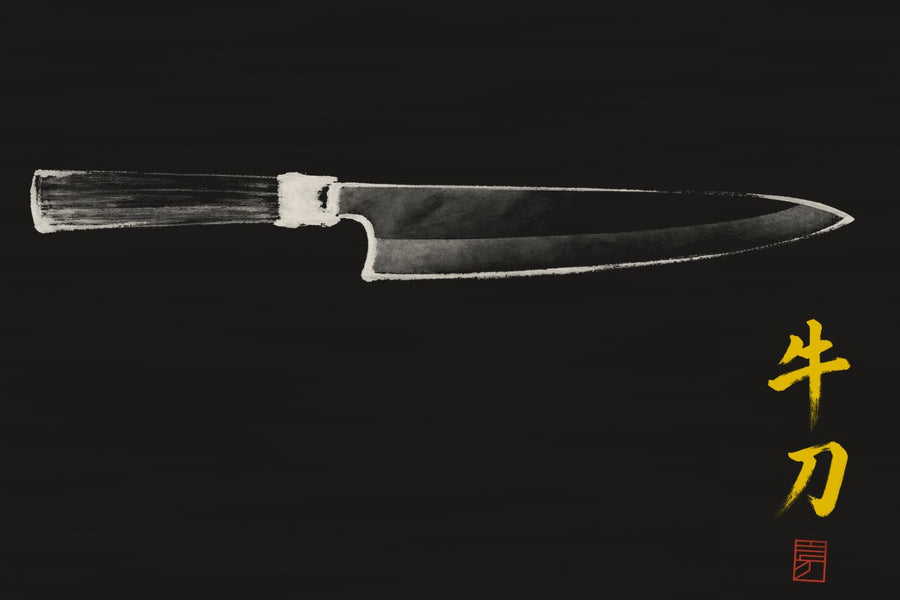
A Japanese chef's knife is known as a gyuto (牛刀 ぎゅうとう) gyūtō), literally meaning 'beef knife'. Its blade resembles a flatter version of a French chef's knife. Japanese cutlery is known for sharpness due to its acute blade geometry, and the hardness of the steel used, sometimes exceeding 60 HRC on the Rockwell Scale A typical western chef's knife may be sharpened to an edge angle of 20-22°, while a Japanese gyuto generally has a sharper edge angle of 15-18° (or even lower), which requires a harder, more brittle grade of steel. In recent years Japanese gyuto have gained in popularity with western chefs.

A modern chef's knife is a multi-purpose knife designed to perform well at many differing kitchen tasks, rather than excelling at any one in particular. It can be used for mincing, slicing, and chopping vegetables, slicing meat, and disjointing large cuts.
Composition

SLD Element Composition

Compare with
    SLD
    12.0% 9.0% 6.0% 3.0% 0
    C Carbon 1.5%
    Primary hardening element. Raises hardness and wear resistance — but too much increases brittleness and corrosion susceptibility. As a reference: German 1.4112 (~0.5%) sits at the low end; VG-10 (~1.0%) is a common mid-range; SG2 (1.25–1.45%) and ZDP-189 (~3.0%) represent high and extreme ends respectively.
    C
    1.5%
    Cr Chromium 12.0%
    Raises corrosion resistance; 13%+ qualifies steel as stainless. Also improves hardenability and wear resistance. In kitchen use, higher chromium levels contribute to a slight drag or sticking sensation when cutting — a trade-off for the rust resistance it provides.
    Cr
    12.0%
    V Vanadium 0.3%
    Forms extremely hard carbides for superior edge retention. Also refines grain structure, improving toughness.
    V
    0.3%
    Mo Molybdenum 0.9%
    Improves hardenability and toughness. Boosts corrosion resistance and helps the steel hold hardness under heat.
    Mo
    0.9%
    Mn Manganese 0.4%
    Aids hardenability and strength. Acts as a deoxidiser during smelting. Excess can reduce toughness.
    Mn
    0.4%
    Si Silicon 0.3%
    Strengthens the steel matrix and acts as a deoxidiser. Improves hardness and resistance to oxidation.
    Si
    0.3%
    C — Carbon Cr — Chromium V — Vanadium Mo — Molybdenum Mn — Manganese Si — Silicon
    Hardness 62–64 HRC
    555759616365+
    Steel
    SLD
    Category
    Stainless
    Manufacturer
    Hitachi Special Steel, Japan 🇯🇵
    Hardness
    62–64 HRC
    Steel

    SLD

    • Manufacturer
      • Hitachi Special Steel, Japan
    • Nature Stainless
    • Hardness62–64 HRC
    Hitachi SLD steel is a tool steel designed originally for die and machining tools. Its composition is practically identical to the D2 tool steel - a classic steel that have withstands the test of time since the WW2. The high level of Chromium content in it have made this steel almost stainless, and the decent amount of Molybdenum and Vanadium forms hard carbide, given this steel a pretty good edge retention. The toughness may be average of its kind, but it shouldn't be a big concern under the condition of normal kitchen use. SLD steel would be a good choice for those who are looking for a steel that can develop a keen edge, but not as attention demanding as a classic carbon steel.
    Construction: Sanmai - Stainless Clad
    Construction

    Sanmai - Stainless Clad

    Sanmai(Three-Piece) is a common construction for double bevel knives where two pieces of softer cladding steel are forgewelded to each side of a harder core steel. The harder but more brittle core steel will form the hard cutting edge after heat treating, and the softer cladding will support the core to increase the overall strength of the blade.

    The soft cladding enables the thinning process to be a lot easier than a honyaki or monosteel construction. And in the case where the cladding steel are stainless in nature, it can offer protection for the carbon or semi-stainless cores against rusting and discoluoring.

    Finish: Nashiji
    Finish

    Nashiji

    The "nashiji finish" on Japanese kitchen knives refers to a unique, textured surface finish that resembles the skin of an Asian pear, which is known as "nashi" in Japanese. This finish is achieved through a specific hammering and polishing technique, giving the knife blade a distinct, matte appearance with a slightly uneven, tactile surface. Beyond its aesthetic appeal, the nashiji finish also provides practical benefits. It helps to reduce food sticking to the blade by creating tiny air pockets between the food and the steel. This finish is commonly found on traditional Japanese knives, such as santokus and nakiris, and is highly valued for both its functional and visual characteristics, enhancing the overall culinary experience.

    Handle
    Handle

    Octagonal Ebony

    • Profile Octagonal WA
    • Material
      • Ebony

    This handle, crafted from a single piece of ebony, exemplifies minimalist elegance and functional design. Its unique octagonal shape, featuring a subtle taper, offers a comfortable grip and a visually appealing geometric profile. The ebony wood, known for its deep, rich color and durability, has been meticulously milled from a single block, ensuring a seamless construction that highlights the wood's natural beauty and grain. The handle's surface has been highly polished, achieving a glossy finish that not only enhances the ebony's luxurious dark hue but also provides a smooth, tactile experience for the user. This design choice reflects a minimalist approach, focusing on simplicity, quality, and usability. The combination of the octagonal shape with the taper adds a modern twist to the classic material, making it a standout piece that blends traditional craftsmanship with contemporary aesthetics.

    1 / 5

    Frequently asked questions

    Gyuto or santoku - which should I choose?

    Both are all-purpose Japanese knives, and for most home cooks either will handle the bulk of daily prep. The choice comes down to length, blade shape, and how you like to cut.

    A gyuto is the Japanese chef's knife - typically 210 to 240mm with a gently curved edge that lets you rock and slide through cuts as well as chop. The extra length and pointed tip give you reach and versatility, from proteins to large produce.

    A santoku is shorter, usually 165 to 180mm, with a flatter profile and a rounded sheep's-foot tip. It rewards a straight up-and-down push cut, feels nimble in smaller hands or tight kitchens, and is the classic Japanese household knife.

    Rule of thumb: choose a gyuto if you want one do-everything knife with more reach, or a santoku if you prefer a compact, easy-to-control blade. Plenty of our customers end up owning both.

    What is a Gyuto, and what is it used for?

    A Gyuto is a double-bevel, general-purpose Japanese chef's knife designed for versatile tasks ranging from slicing meat to chopping vegetables.

    At K&S, you can find 306 Gyuto options ranging from entry-level models to premium collectibles, with popular in-stock models including the mid-range Hatsukokoro Ryuhyo SG2 Damascus Blue Gyuto 210mm and the more affordable Kouki Blue2 Kurouchi Gyuto 150mm. These knives typically feature steels like VG10, SG2, Blue#2, and White#2, and are made by brands such as Sakai Takayuki, Masamoto Sohonten, and Yoshimi Kato.

    What size gyuto should I buy?

    For most home cooks and professionals, a 210mm gyuto is the ideal starting size because it balances versatility with control, as seen in the Masakage Yuki White2 Gyuto 210mm Stainless Clad at a mid-range price. If you have larger hands or need to handle bigger cuts of meat, the 240mm option like the Yoshimi Kato Hyo SG2 Gyuto at a higher price point offers more and blade surface area.

    The catalog lists 210mm and 240mm as the primary sizes available from makers like Hatsukokoro and Masakage, with mid-range options including the Hatsukokoro Kurokaze White 2 and the higher-priced Hatsukokoro Komorebi Blue 2. You should choose the 210mm if you prioritize maneuverability on standard cutting boards, while the 240mm suits those who need a longer blade for slicing large roasts or fish without repositioning the food as often.

    240mm vs 210mm gyuto — which size should I choose?

    Choose a 240mm gyuto if you need longer reach for slicing large cuts of meat or working on big cutting boards, but opt for a 210mm gyuto if you prioritize maneuverability and have limited counter space.

    The 240mm length offers a longer cutting stroke, which is useful for slicing through large roasts or fish whole, while the 210mm size provides better control for detailed work and fits more easily in standard home kitchens. For a concrete example of the larger option, the Yoshimi Kato Hyo SG2 Gyuto 240mm is available at a higher price point and uses SG2 steel. If you prefer the smaller size, the Masakage Yuki White2 Gyuto 210mm Stainless Clad is in stock at a mid-range price, or the Hatsukokoro Kurokaze White 2 Gyuto 210mm Stainless Clad with a Tall Profile is available at a mid-range price. The trade-off is strictly between the extra reach of the 240mm and the lighter handling of the 210mm; neither is objectively superior without knowing your specific board size and hand strength.

    We trust this information is correct at the time of writing, but it is not an official document and details may change without notice. If you spot an error, tell us and we'll fix it.

    You May Also Like