PRAHRAN STORE NOW OPEN · THU–MON · 10AM–6PM

Naoto  |  SKU: NAOTO_B1KUDM_BK180

Naoto Blue 1 Damascus Kurouchi Bunka 180mm

Regular price ₩304,000

IMPORTANT: Carbon steel knives can rust or patina quickly if not cared for properly. They require regular cleaning, drying, and oiling. If you are unfamiliar with carbon steel maintenance, we recommend choosing a stainless steel option instead.

Sold out right now

Leave your email and we’ll send one message the moment it’s back in stock.

One email, no marketing. Privacy policy.

Availability

  • St Peters, NSW —
    2 Bishop St, Unit 2, St Peters NSW 2044
  • Crows Nest, NSW —
    107 West St, Shop 1, Crows Nest NSW 2065
    Pickup only
  • Prahran, VIC —
    180 Commercial Road, Shop 1, Prahran VIC 3181
    Pickup only
Detailed Specifications
Line Naoto Blue 1 Damascus Kurouchi
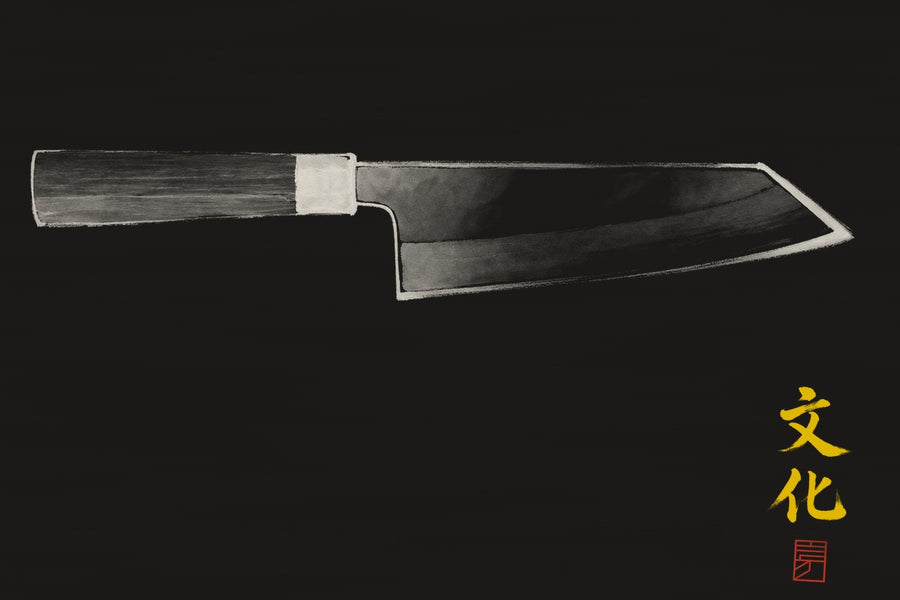
Profile Bunka / K-tip santoku
Bevel Type Double Bevel
Weight 138 g | 4.9 oz
Edge Length 179 mm | 7 3/64″
Heel Height 43 mm | 1 11/16″
Width @ Heel 3.4 mm | 9/64″
Width @ Mid 2.1 mm | 5/64″
Width @ 1cm from Tip 0.8 mm | 1/32″
Steel Blue 1 / Aogami #1 | Carbon
Blade Construction Sanmai - Soft Iron Damascus Clad
Hardness (HRC) 61 - 64
Surface Finish Kurouchi
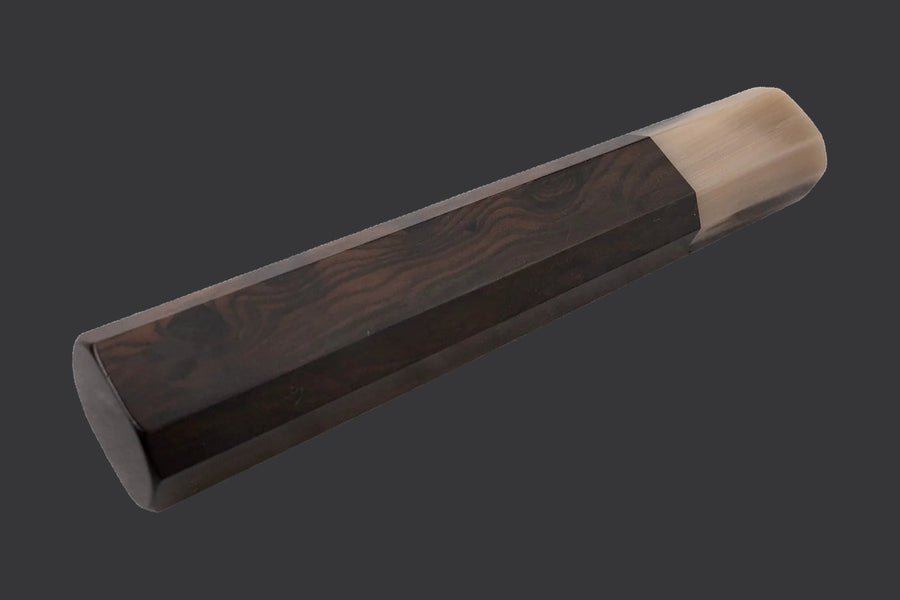
Handle Octagonal Ebony Blonde Horn
Region Tosa
Best for
  • Enthusiasts
  • Pro chefs
  • Free shipping for knives over AU$200 Australia wide.
  • World-wide shipping via DHL Express, 3 to 5 days.


Naoto Kitaoka is a Tosa-based maker, and this Blue 1 Damascus Kurouchi line carries the regional character you'd expect — hand forged with a thick neck that tapers noticeably toward the tip, giving the knife a stiffness and control near the handle while keeping the front of the blade light and responsive. It's a handling profile that Tosa forging does particularly well, and Naoto executes it cleanly here.

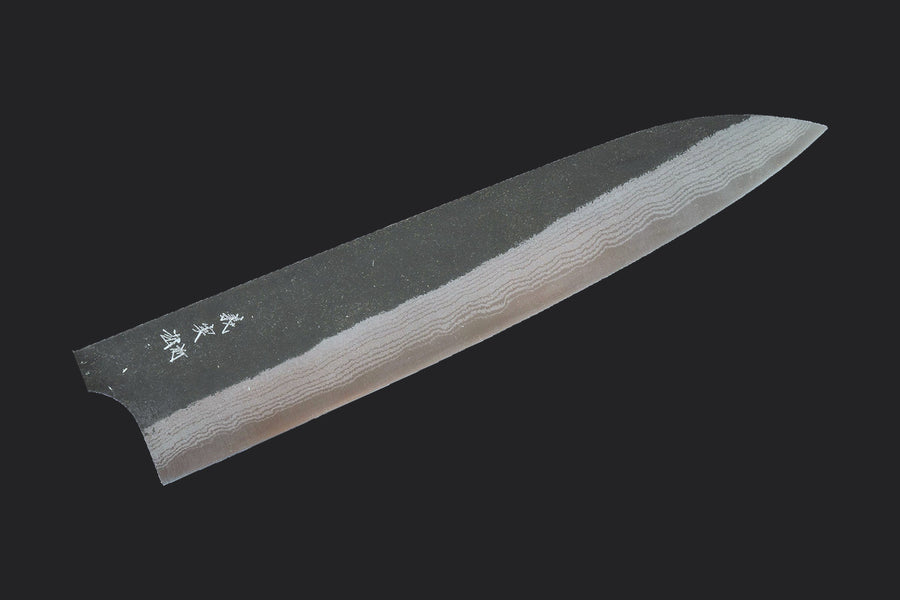
The Damascus cladding has an interesting story behind it. Rather than a fully hand-laminated billet, this line starts from a pre-laminated Damascus — but the hand forging process leaves its mark on the pattern, distorting the layers near the cladding line into a continuous swirling shape. The result sits between the uniformity of a purely machine-laminated Damascus and the full dynamism of an entirely hand-forged one — it has movement and character without being chaotic, and the Kurouchi finish over it keeps the aesthetic grounded and honest. The iron Damascus cladding means the entire blade requires regular maintenance to prevent rust, which is the standard commitment for any carbon steel knife of this construction.

The core steel is Blue 1 (Aogami 1), a high carbon steel that sits above Blue 2 in wear resistance and produces a very sharp, aggressive edge. The grind is concave with a spine that sits slightly on the thicker side — not a laser by any measure, but the edge is kept genuinely thin and the concave geometry brings it down cleanly. Food penetration is decent and the Shinogi line handles food release reliably on ingredients with enough height to reach it. It's a well-balanced geometry that prioritises longevity and versatility over outright thinness.

The fit and finish stands out for a Tosa-made knife at this price — the polish is refined, the choil and spine are well treated, and the overall execution matches the asking price without any obvious shortcuts. For enthusiasts and professional chefs who want a hand forged carbon steel knife with genuine character and honest performance, this is a strong option in the Tosa lineup.

Pros Cons
  • Thin behind the edge
  • Great artistic
  • Prone to rust
Care Instruction
  1. Don't cut hard things! Japanese knives are brittle so bone hacking is a NO NO!
  2. Wash with neutral detergent after use, and wipe dry;
  3. Please don't wash knife with dishwasher, it will damage the wood handle;
  4. Be careful not to leave the knife close to a heat source for a long time;
  5. It is a lot more dangerous to cut with a blunt knife than a sharp knife!
  6. It is best to sharpen a Japanese knife regularly on a waterstone.
  7. Oil the (carbon) knife if storing for an extended period of time to prevent rust.

Naoto Kitaoka

Naoto Kitaoka is an experienced blacksmith that has been making knife for over a decade. 20 years of blacksmithing alongside his grandfather, a blacksmith specialise in single bevel and sickle forging, shaped an excellent control over red hot steels. Naoto's experience reflect in his knives: a variety of hand forged blades that have a clean, uniform finish that stands out in knives of similar designs.

Read more

Naoto Kitaoka (北岡直斗) forges in Kochi Prefecture, in the Tosa forged-blade tradition (土佐打刃物). Blacksmithing runs in his family from his great-grandfather's generation, but for most of that run they were sickle smiths (鎌鍛冶). Kitchen knives became the serious business of the shop in Kitaoka's own generation.

The hallmark of his knives is the beauty of the black finish. Kitaoka does not treat kurouchi (黒打ち) as a by-product of the forge; he works it clean and even, forging one knife at a time toward a quality that stands with work from other regions. Kochi's blade trade still runs heavily on subcontract work, and his stated ambition is to be chosen as a craftsman in his own right, not on the strength of the region's name.

Under the finish, what he rates highest is how long an edge stays sharp. He keeps decarburisation down (脱炭を抑え) in the fire, since that is where steel loses the surface carbon an edge depends on.

As Kitaoka puts it: "Today is better than yesterday, and tomorrow will be better than today."

Est. 2016 | 平成28年
Read more about Naoto Kitaoka
Naoto Kitaoka — Tosa
Open in Maps app
Tip: add map_place_id for best accuracy.

Knife details

Frequently asked questions

Will a carbon steel knife rust, and how do I look after it?

Yes - carbon steels such as Aogami (Blue) and Shirogami (White) react with food, moisture, and acids. Left wet they can spot or rust, and with normal use they develop a grey-blue patina. That patina is expected and is part of owning a carbon-steel knife; it is not damage.

Care is simple once it becomes habit: hand-wash in warm water, never leave the knife soaking or sitting in a wet sink, and dry it thoroughly the moment you finish. Avoid the dishwasher entirely, and wipe the blade between tasks when you are cutting acidic foods like citrus, tomato, or onion.

If the knife will sit unused for a while, wipe a very thin film of food-safe camellia oil (or a neutral mineral oil) onto the blade before storing it. A light surface rust spot lifts easily with a rust eraser or a little Bar Keepers Friend; sustained neglect is the only thing to really avoid.

Carbon steel rewards this small amount of attention with a keener edge and easier sharpening than most stainless. If you would rather not think about maintenance at all, ask us about stainless or stainless-clad options instead.

You May Also Like